The Math Behind Mona Lisa
- Samvar Shah

- Nov 15, 2025
- 1 min read
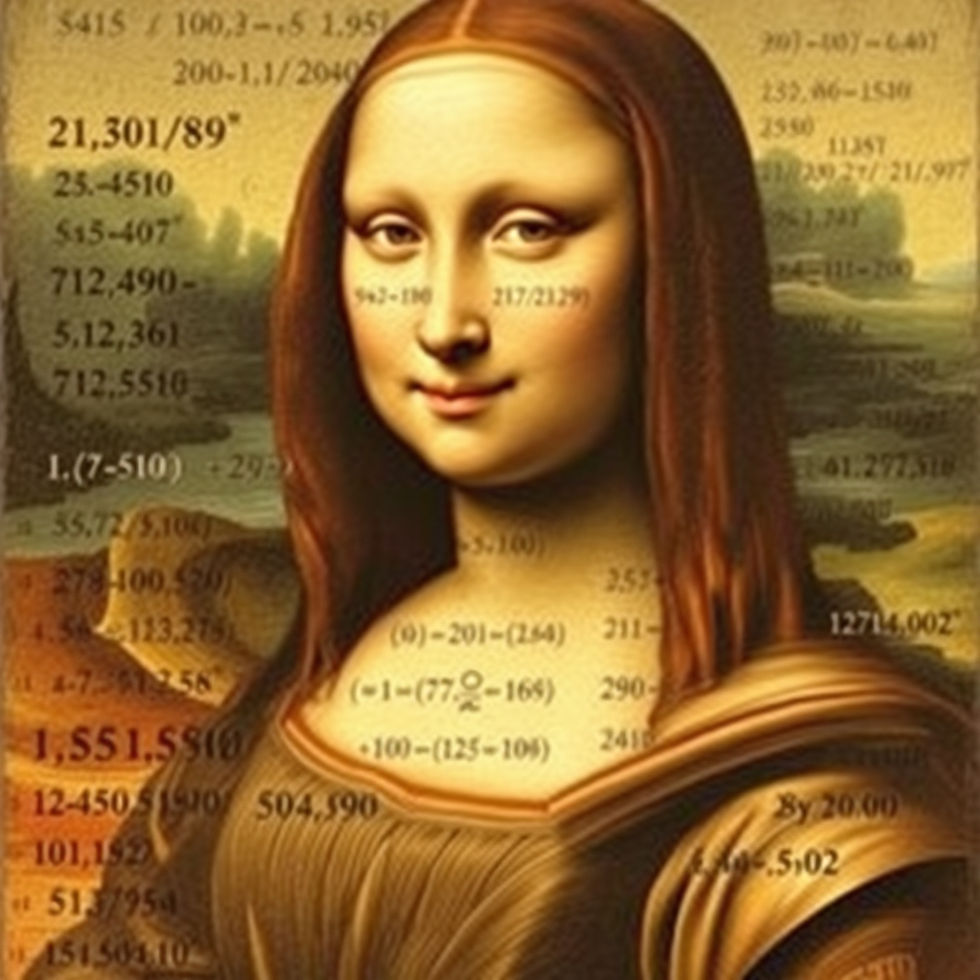
While we may think math and art live in different worlds, the truth is many famous works of art are built on real mathematical ideas.
One of the most famous examples is Leonardo da Vinci's 'Mona Lisa'. Art historians have pointed out that the painting's composition closely aligns with the mathematical idea of golden ratio. Even if one doesn't know that golden ratio is 1.618, one can see that Mona Lisa's face, eyes, nose etc. fall along key points of this ratio which is instrumental in creating a sense of harmony that viewers feel when seeing the painting.
Leonardo also uused math in another masterpiece, 'The Last Supper'. The room in the painting uses the concept of one-point perspective where all diagonals meet at a single point. The ceiling, the walls, the edges of the table all meet at a single point behind Christ's head. This geometric structure guides a viewer's eyes to the central figure, even without them realizing it- an example of how math can be used to guide a viewer's focus.
This shows that math is built into some of the most iconic art works created. Having an interdisciplinary mindset, indeed elevates all our work.
What are your thoughts? Do you think math helps art and vice versa?


I paint but never thought maths is in my paintings…